

Practical Life in Montessori: Nurturing Independence, Focus, and Lifelong Skills
Updated: Aug 29, 2025
Practical life activities in Montessori education form the foundational “work” of the early childhood classroom, nurturing independence, coordination, and a joyful engagement with the real world. More than simply learning to pour water or sweep a floor, these activities honor the stages of child development, providing precisely what children need for their hands, minds, and spirits at each age and phase.
Sensitive Periods and Planes of Development
Maria Montessori identified sensitive periods: unique windows in which children are especially receptive to acquiring certain skills. From ages 2.5 to 6, children enter a sensitive period for order, movement, and language—making this the ideal moment to introduce practical life exercises. Practical life aligns with the first plane of development (0–6 years). At this stage, children naturally imitate adults, crave purposeful movement, and experience tremendous satisfaction in mastering real-life tasks.
As children progress to the second plane (6–12 years), their motivation shifts from “help me do it myself” to “help me think for myself” and “how can I contribute?” Here, practical life evolves, with older children managing classroom routines, planning group projects, and even mentoring younger peers.
Activities: From Simple to Complex
Practical life activities are thoughtfully sequenced, so children build from simple to more complex works:
Preliminary Exercises: These teach foundational skills such as rolling a mat, pouring, spooning, opening and closing containers, and carrying a tray.
Care of Self: Handwashing, buttoning, brushing hair, and dressing frames cultivate independence and self-respect.
Care of Environment: Sweeping, dusting, plant watering, polishing wood or silver, cleaning windows, or scrubbing tables promote responsibility for shared spaces.
Grace and Courtesy: Lessons in greeting others, offering help, or excusing oneself build social skills central to a peaceful classroom.

Opening and Closing
Children may start by carrying a tray, gradually developing control through spooning and pouring, before advancing to involved tasks like scrubbing a table or wood polishing, which require multiple coordinated steps and greater attention.
Motivation: Why Practical Life Captivates Children
Young children are drawn to practical life out of a deep desire for independence and mastery. Maria Montessori observed that, given the chance, children are happiest when “helping” adults—pouring, cleaning, or preparing food—because these activities fulfill their inner need to be purposeful and capable.
In the early years, the motivation is intrinsic: “Let me do it myself.” Children delight in repetition, perfecting their movements, and feeling part of the adult world. For older children, motivation increasingly comes from a desire to contribute meaningfully to their community, to demonstrate responsibility, or to teach others.
When an older child is struggling academically or seems disengaged, returning to practical life activities can be profoundly restorative. These hands-on works offer immediate success, tactile feedback, and a calming reset—making them ideal as brain breaks after challenging language or math work. Practical life re-centers the child, fosters renewed focus, and restores a sense of competence and order.

The Three-Step Cycle
A hallmark of practical life in Montessori is the three-step work cycle:
The child chooses the activity independently.
The child completes the work, repeating if desired.
The child restores the materials to the shelf, ready for the next child.
When each step is respected, children cultivate autonomy, responsibility, and respect for community—core tenets of Montessori’s vision for education.
In-Depth Example: From Pouring to Polishing
Spooning Beans: Young children develop fine motor control and concentration as they transfer beans using a spoon—an indirect preparation for holding a pencil.
Washing a Table: This more complex work involves gathering materials, scrubbing in sequence, rinsing, drying, and returning materials—each step building executive function, problem-solving, and satisfaction upon completion.
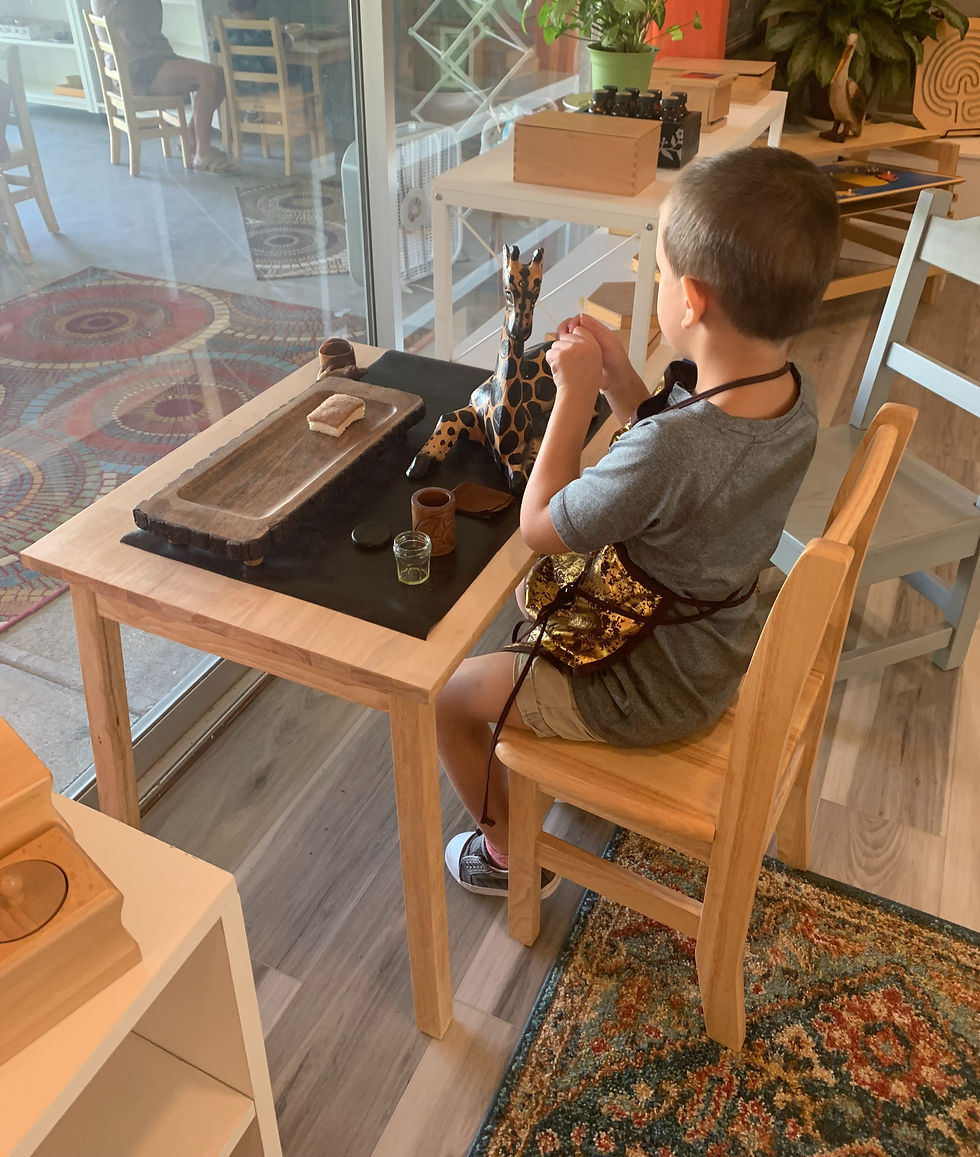
Polishing Wood: The process unfolds in a careful sequence with attention to detail, developing precision, order, and an appreciation of beauty.
Conclusion
Practical life is so much more than chores; it is the backbone of Montessori’s whole-child approach. These activities honor children’s developmental stages, offer the tools for lifelong learning, and empower young people to become competent, caring members of their world—one small act at a time.
Sources show that practical life’s careful sequencing—from preliminary exercises through complex multistep works—meets children’s developmental needs at every stage, providing both the competence to thrive academically and the self-regulation essential for lifelong success.


Comments